
Zycus Horizon SEA Edition 2026 · July 21-22, 2026 Register Now

Navigating the complexities of procurement in a constantly evolving landscape can be daunting. From maximizing supplier relationships to harnessing the power of AI, procurement leaders face a myriad of challenges. Agentic AI for supplier network optimization is emerging as a game-changing solution, offering strategic advantages through automation, predictive insights, and improved supplier collaboration. Understanding this technology, leveraging AI-powered networks effectively, and optimizing supplier interactions with smart agents are pivotal in helping procurement teams thrive in today’s dynamic and competitive environment.

TL;DR

  • Agentic AI is revolutionizing procurement by enabling smarter, faster, and more strategic decisions through automation and predictive analytics.
  • Supplier networks are becoming more transparent and resilient with AI-driven visibility and risk assessment, addressing supply chain blind spots.
  • Smart agents are reshaping supplier relationships, automating negotiations, and driving performance through continuous data analysis.
  • Real-world results from leaders like Johnson & Johnson and Walmart show major boosts in efficiency, cycle time, and cost reduction using AI.
  • Adopting Agentic AI is no longer optional—it’s a strategic imperative to future-proof procurement and achieve operational excellence.

Understanding Agentic AI and Its Role in Procurement

Agentic AI in procurement isn’t just a buzzword; it represents a significant evolution in how businesses manage their supply chains. Picture your procurement strategy as a chess game where Agentic AI acts as a seasoned grandmaster, strategically planning each move for optimal outcomes.

This technology integrates AI to facilitate smart decision-making processes, making procurement more efficient and less prone to human error. According to a 2023 KPMG study, AI can help cut the time it takes to complete basic procurement tasks by up to 80%.

Agentic AI enables:

  • Enhanced Data Analytics: By leveraging data, organizations gain insights into supplier performance and market trends, facilitating better negotiation and strategic sourcing.
  • Predictive Insights: Businesses can forecast demand and assess potential risks, ensuring a more resilient supply chain.
  • Automated Processes: From supplier selection to performance evaluation, automation reduces manual tasks, freeing up procurement professionals for strategic activities.

Gartner reports that by 2027, 50% of organizations will support supplier contract negotiations through the use of AI-enabled contract risk analysis and editing tools.

Agentic AI also acts as a catalyst for fostering supplier relationships. Imagine having a digital collaborator that provides real-time insights, paving the way for more collaborative vendor interactions.

Investing in these technologies, as highlighted by Oracle, can lead to better relationships and cost savings.

Understanding and effectively utilizing Agentic AI for procurement optimization isn’t just forward-thinking—it’s becoming an industry standard.

Unlocking Value with Agentic AI for Supplier Network Optimization

As we explore deeper into the realm of AI-powered supplier networks, think of them as the nerve center of modern procurement, where information flows seamlessly, enabling informed decisions.

Integrating AI into supplier networks provides a strategic edge by ensuring that your supply chain is both responsive and resilient. According to a 2024 survey by the Business Continuity Institute, 60% of companies claimed comprehensive visibility of their direct suppliers, while only 30% had visibility further down their supply chain. This highlights the need for AI-driven solutions to enhance supplier network transparency.

Here’s what AI can bring to supplier networks:

  • Enhanced Visibility: Real-time analytics allow companies to track supply chain metrics, providing the agility needed to manage unforeseen disruptions.
  • Proactive Risk Management: AI systems can predict supplier risk by analyzing data such as geopolitical factors or financial health, mitigating potential challenges before they occur.

Beyond operational efficiencies, AI-powered networks position organizations to build stronger, more collaborative partnerships with suppliers. By sharing insights, they foster a healthier supplier ecosystem. Ultimately, harnessing AI for supplier networks isn’t just about managing inventory and delivery times—it’s about building a sustainable, strategic advantage.

Read more: Guide to Procurement Agents: Roles, Skills & How AI is Changing the Game

Optimizing Supplier Relationships with Smart Agents

Shifting focus to optimizing supplier relationships, the introduction of smart agents in procurement is like having a seasoned negotiator constantly on your team. These AI-powered systems ensure that each interaction is strategically beneficial.

Smart agents analyze a wealth of data to provide actionable insights at every stage of the procurement process. Imagine how this plays out in real time: Johnson & Johnson, for example, has implemented smart agents to streamline supplier interactions, resulting in a 20-30% increase in buying, contracting, and sourcing activity. Cycle times have dropped by between a third and a half, compared to what they were before the pandemic.

  • Dynamic Supplier Scoring: By assessing performance metrics continuously, smart agents can help identify which suppliers can best meet evolving business needs.
  • Automated Negotiations: Utilizing AI’s enormous data processing capabilities, smart agents can facilitate autonomous negotiations that result in win-win outcomes. For instance, Walmart has automated negotiations with suppliers, securing agreements with 68% of those approached, reducing costs by 1.5%, and extending payment terms.

In the retail sector, Walmart leverages smart agents to maintain its supply chain robustness and manage supplier performance efficiently. By implementing AI-driven logistics and procurement systems, Walmart has optimized routes to bypass 110,000 inefficient paths, leading to significant enhancements in supply chain efficiency.

With smart agents, procurement teams can focus more on strategic sourcing and less on transactional tasks. Enhanced collaboration technologies not only improve existing partnerships but also help forge new ones, setting the stage for a future where technology and human ingenuity drive procurement excellence.

Read more: Pioneering Procurement: Building Your First Agentic AI Use Case

Future-Ready Procurement: The Impact and Challenges of Agentic AI

Transitioning into future-ready procurement, a notable stat reveals that organizations implementing AI have seen procurement processing time reduced by up to 80% (Oracle, 2023).

Agentic AI represents both a revolution and a reality check for procurement. The potential is vast but not without challenges. Embracing AI in procurement means harnessing technology to automate and optimize processes, yet it also demands overcoming hurdles like data integration and workforce adjustment.

  • Automation and Efficiency: AI-driven tools bring unprecedented efficiency, automating routine tasks and allowing procurement teams to focus on strategic roles. According to Oracle, companies using intelligent automation in procurement have decreased operational costs by 30% (Oracle, 2023).
  • Predictive and Prescriptive Insights: The introduction of predictive analytics helps businesses anticipate supply chain disruptions. For instance, pharmaceutical company Pfizer leverages AI to foresee and mitigate supply issues, improving service levels by 20% (Oracle, 2023).

Agentic AI is shaping the future of procurement, setting the foundation for more resilient and predictive operations while navigating challenges with strategic foresight.

Read more: Autonomous AI Agents in Action: The Future of Procurement

Conclusion

In conclusion, mastering the intersection of Agentic AI and strategic procurement is pivotal for staying ahead in today’s dynamic environment. By understanding the impact of AI, leveraging smart networks, and optimizing supplier relationships, organizations can unlock new levels of efficiency and resilience. Embracing these technologies isn’t just an option—it’s a strategic imperative. To propel your procurement processes to new heights, take the next step in exploring tailored solutions or strategic partnerships that align with your vision. The future of procurement excellence awaits those ready to embrace innovation and drive sustainable growth.

Explore Zycus’ Merlin Agentic AI & Self-Service Procurement

How can we help

Zycus offers cutting-edge solutions that seamlessly integrate Agentic AI into procurement practices, addressing critical challenges like efficiency and supplier relationship management. With its AI-powered platform, Zycus enhances visibility across supplier networks, enabling strategic sourcing and automated processes that reduce operational bottlenecks. By leveraging predictive analytics and smart agents, the company helps organizations foresee potential risks and optimize negotiations. Zycus caters to the evolving needs of procurement teams, ensuring they are equipped with the tools necessary to adapt and thrive. Explore Zycus to transform procurement operations into a streamlined, future-ready system that drives sustainable business success.

Related Reads:

  1. Things You should Know about your Supplier Network! 
  2. Building Success Through a Solid Supplier Management Framework
  3. Brochure- Supplier Management
  4. Embracing Automation for Enhanced Connectivity, Supply Network Relationship, and Role of Automation
  5. Zycus Supplier Network Management Software
  6. eGuide- The Ins and Outs of Supplier Networks 
  7. Whitepaper- Essential Components of a World-Class Supplier Performance Management Tool: A MENA Perspective
Navigating through the complexities of modern procurement can feel like wandering a maze blindfolded. Understanding the roles of Agentic and generative AI in procurement is the compass providing clarity, guiding you toward efficient decision-making. The seamless collaboration between these two AI technologies transforms procurement from a tedious task into a strategic powerhouse, enabling organizations to automate, optimize, and evolve with confidence.

TL;DR

  • Agentic AI drives real-time decision-making in procurement by analyzing data patterns and offering strategic recommendations.
  • Generative AI automates content-heavy tasks like RFPs, RFQs, and contracts, improving speed and reducing manual errors.
  • Together, they create a synergistic AI ecosystem that streamlines procurement, enhances agility, and supports self-service procurement models.
  • Companies using both AI types see improved supplier management, cost savings, and faster, more accurate sourcing decisions.
  • Successful integration requires clean data, clear objectives, team training, and ongoing performance tracking.
  • Organizations embracing this AI synergy gain a competitive edge through smarter, autonomous, and future-ready procurement operations.

Understanding the Roles of Agentic and Generative AI in Procurement

Understanding the roles of Agentic AI and Generative AI within procurement is like tuning an orchestra where both play distinct but harmonious parts. Agentic AI can be likened to the diligent conductor; it sets the tempo by driving decision-making processes and ensuring operations run smoothly. It oversees tasks ranging from supplier selection to contract management by identifying patterns and recommending actions based on accumulated data.

Generative AI acts as the creative genius within this ensemble. It generates content that augments procurement activities like invoice processing or purchase order automation. By understanding and replicating human language, Generative AI automates the drafting of RFPs and RFQs, reducing manual entry errors and speeding up operations. According to Deloitte, automation in procurement can lead to significant cost reductions, with potential savings of up to 60% through automated processes.

In synergy, these AI types streamline procurement activities, pushing towards autonomous operations. Together, they reduce error margins, inefficiencies, and enhance compliance, much like a violin and flute finding their respective places within a symphony. The Hackett Group emphasizes this optimal use of AI, noting that when the procurement department begins using RPA, it can result in cost reductions of up to 17% on average.

This artistic collaboration between Agentic and Generative AI supports procurement teams in navigating complex supplier dynamics effectively, providing real-time insights and predictive analytics that keep procurement strategies in the key of success.

The Seamless Collaboration: How Agentic and Generative AI Transform Procurement

As we explore further into the seamless collaboration of Agentic and Generative AI in procurement, the harmony continues. These AI technologies are driving a complete transformation in procurement’s operational landscape.

Agentic AI, with its strategic focus, ensures real-time decision-making and agile procurement processes. It acts as a tactical mentor, analyzing data patterns to provide actionable insights that make procurement more predictive and strategic.

Generative AI, on the other hand, contributes with its knack for automating content creation, enabling procurement teams to save time on mundane tasks. By efficiently generating responses and documents, it supports dynamic interactions in contract negotiations and supplier communications. A study by Deloitte found that organizations implementing business process automation experience a productivity boost of around 20%.

In collaboration, these AI tools create a proactive procurement ecosystem through:

  • Enhanced risk management by predicting potential disruptions
  • Streamlined supplier management with real-time performance data
  • Automated contract management and invoice processing

The orchestration between Agentic and Generative AI allows procurement professionals to focus on strategic decisions rather than routine operations. Their joint capabilities foster a resilient and agile procurement strategy, which underscores the importance of agility in navigating today’s dynamic supply landscapes.

Implementing Best Practices for Integrating Agentic AI and Generative AI in Procurement

Building from where we left, implementing Agentic and Generative AI in procurement requires a thoughtful roll-out plan rooted in best practices. As these AI systems offer diverse functionalities, it is crucial to integrate them into existing frameworks seamlessly.

One standout example is in the manufacturing sector, where companies like Siemens have leveraged AI for predictive maintenance and streamlined procurement workflows. Siemens has successfully integrated AI into its manufacturing processes, focusing on predictive maintenance and process optimization, resulting in a 50% reduction in unplanned downtime.

To successfully integrate Agentic and Generative AI:

  • Start with Data Quality: Clean and robust data ensures accuracy in AI predictions. General Electric has saved $80 million over the past few years by integrating supplier data across business units.
  • Defined Objectives: Align AI integration with clear goals such as cost reduction or supplier optimization. For instance, SAGW, a subsidiary of SAIC Motor Corporation, implemented GE Vernova’s Proficy Plant Applications, leading to a 40% reduction in inspection costs.
  • Train Teams: Foster AI literacy among procurement professionals to maximize tool utilization.
  • Continuous Monitoring: Track AI performance metrics for constant refinement.

Industries embracing these best practices are experiencing transformative benefits. For example, Siemens’ use of AI-powered supplier scouting has led to a 90% reduction in workload for identifying new potential suppliers.

The Rise of Self-Service Procurement: Empowering Users with AI

Building on the successful integration of AI technologies, the shift towards self-service procurement is proving transformative. Organizations implementing self-service procurement systems have observed significant improvements in procurement efficiency. For example, a global printing company uses an AI-supported procurement application to negotiate volume discounts from approved indirect suppliers in return for early payments, leading to notable cost savings. This model is reshaping how users interact with procurement systems, putting more power directly into the hands of the end-users.

AI plays a pivotal role in this evolution by driving convenience and speed. Procurement teams benefit from autonomous systems that streamline requisition processes, thereby reducing bottlenecks. For instance, AI tools can process invoices and approve purchase orders automatically, cutting down procurement cycle times by nearly 30%.

Key advancements include:

  • Automated Catalog Management: Users can access AI-curated catalogs that simplify item selection and procurement compliance.
  • Intelligent Analytics: Insight-driven dashboards empower users to make data-backed decisions on-the-fly.
  • Chatbots and Virtual Assistants: These AI tools streamline user inquiries, enhancing user experience and increasing adoption rates.

Industries such as retail and IT services, which have adopted self-service models, report significant reductions in overhead costs. For instance, companies leveraging AI in procurement have reported up to 40% cost reductions by eliminating inefficient processes. Companies utilizing AI-driven self-service procurement are positioned to harness a competitive advantage, optimizing their supply chain and fostering strategic spending growth. This shift not only impacts cost-efficiency but also significantly improves user satisfaction and procurement responsiveness.

Conclusion

In conclusion, the synergy between Agentic and Generative AI in procurement opens up a realm of possibilities for optimizing processes and driving strategic growth. By understanding their roles, fostering seamless collaboration, and implementing best practices, organizations can revolutionize their procurement functions. Embracing AI technologies is not just a trend but a strategic imperative in today’s competitive landscape. To stay ahead, consider exploring further resources on AI integration in procurement or scheduling a demo to witness the transformative power firsthand. The journey towards procurement excellence begins with taking decisive steps today to secure a successful and efficient future tomorrow.

How can we help

Zycus, as a leader in procurement technology, empowers organizations to unlock the future of procurement through the seamless synergy of Agentic and Generative AI. Their comprehensive suite of AI-driven solutions enhances operational efficiency by automating routine tasks and delivering intelligent insights for strategic decision-making. Zycus’ advanced AI capabilities streamline supplier management, optimize contract processes, and enable predictive analytics, fostering a proactive procurement environment. By leveraging Zycus’ tools, businesses can seamlessly integrate AI innovations into their procurement strategies, ensuring agility and competitiveness in an evolving marketplace. This strategic partnership supports organizations in maximizing efficiency and achieving transformative outcomes.

FAQs

Q1. What is Agentic AI in procurement?

Agentic AI refers to artificial intelligence systems that autonomously make or recommend real-time decisions in procurement. They analyze supplier data, identify risks, and optimize sourcing strategies, allowing procurement teams to act faster and more strategically.

Q2. How does Generative AI support procurement operations?

Generative AI automates content creation and documentation tasks such as drafting RFPs, RFQs, and contracts. It reduces manual effort, eliminates repetitive data entry, and accelerates procurement cycles while ensuring accuracy and compliance.

Q3. What is the difference between Agentic AI and Generative AI?

Agentic AI focuses on decision-making and optimization, guiding procurement actions based on data insights.
Generative AI, on the other hand, focuses on content creation and automation, producing written materials and automating documentation processes.
Together, they form a complementary system that enhances efficiency and agility.

Q4. How do Agentic and Generative AI work together in procurement?

When combined, these two AI types create an intelligent procurement ecosystem.
Agentic AI provides strategic insights and decision recommendations, while Generative AI executes automated workflows like document generation and supplier communications — resulting in faster, data-driven, and more autonomous procurement.

Q5. What are the main benefits of using AI in procurement?

Key benefits include:

  • Reduced operational costs (up to 40–60%)
  • Improved supplier management and risk mitigation
  • Faster decision-making through predictive analytics
  • Enhanced accuracy and compliance in documentation
  • Empowerment of self-service procurement models

Q6. What are the best practices for integrating AI in procurement?

To successfully integrate AI technologies:

  • Maintain clean, high-quality data.
  • Set clear business objectives.
  • Train procurement teams on AI tools.
  • Continuously monitor and refine AI performance.
  • Align AI implementation with overall digital transformation goals.

Q7. What is self-service procurement, and how does AI enable it?

Self-service procurement allows employees or departments to handle purchases directly through AI-powered systems.
AI simplifies catalog management, automates purchase orders and approvals, and provides real-time analytics — empowering users while maintaining governance and compliance.

Q8. Which industries are leading in AI-powered procurement?

Manufacturing, IT services, and retail sectors are early adopters.
For example, Siemens uses AI for supplier scouting and predictive maintenance, reducing workloads by up to 90%, while other enterprises leverage AI for dynamic contract management and cost optimization.

Q9. What challenges should organizations anticipate when adopting AI in procurement?

Common challenges include data silos, lack of AI literacy, resistance to change, and unclear success metrics.
These can be mitigated through phased implementation, stakeholder buy-in, and ongoing training.

Q10. How does Zycus support AI-driven procurement transformation?

Zycus empowers organizations with an integrated suite of AI-driven procurement solutions.
Its Agentic and Generative AI tools automate tasks, enhance supplier management, and provide predictive insights — enabling smarter, faster, and more autonomous procurement decisions.

Related Reads:

  1. Unlocking Success: Intake Management Best Practices And Key Strategies
  2. The Growing Significance of Intake Management in the Procurement Technology Market
  3. Intake-to-Pay vs. Procure-to-Pay: Key Differences and Selecting the Right Approach
  4. Revolutionizing Procurement: The Promising Future of Intake Processes
  5. Steps to Transform Your Procurement Intake Process
  6. Revolutionizing Procurement Requests and Intake Management: Empowering Users in the Procurement Ecosystem
  7. On Demand Webinar: Driving AP Transformation and Cost efficiency with AI-led Automation
  8. eBook: 7 Key Considerations to More Effective Supplier Risk Management
  9. Research Report: The C-Suite’s Guide to Successful Accounts Payable Transformation
  10. TechWatch: Integrated & Intelligent Source-to-Pay

Introduction

Contract management is a mission-critical function that determines operational efficiency, regulatory compliance, and financial performance in the modern banking landscape. Yet, many banks still rely on manual, fragmented processes to manage contract renewals in banking, leading to inefficiencies, compliance risks, and revenue leakage.

Agentic AI for banking, an advanced subset of artificial intelligence, is transforming the way financial institutions handle service renewals. By enabling autonomous decision-making, predictive analytics, and real-time contract optimization, AI-driven contract management ensures that banks not only meet compliance requirements but also maximize financial value and customer satisfaction.

The Challenges of Manual Contract Renewals in Banking

Traditional contract renewals in banking are plagued with inefficiencies. Many institutions rely on spreadsheet-driven tracking systems or outdated enterprise tools that fail to provide real-time insights. As a result, missed renewal deadlines lead to lapses in service continuity, often causing rushed negotiations that leave banks at a disadvantage. Without structured negotiation frameworks, banks fail to capitalize on cost-saving opportunities, leading to revenue leakage. Additionally, regulatory non-compliance is a looming risk, with banks required to adhere to stringent regulations such as Basel III, GDPR, and FFIEC guidelines. The inability to track obligations effectively results in violations that attract penalties and damage reputations.

Download Whitepaper: Autonomous Negotiation Agents: Unlocking Millions from Missing Middle

Another significant challenge is the lack of a centralized repository for contracts. Many banks operate in silos, making it difficult to track service agreements, expiration dates, and obligations. This fragmented visibility leads to ineffective vendor management and limits negotiation leverage. Without access to real-time pricing benchmarks and automated risk assessments, banks often find themselves paying higher fees for contract renewals in banking while missing out on improved contract terms.

The Rise of Agentic AI in Contract Management

Agentic AI for banking contract renewals represents a shift from traditional rule-based automation to AI-powered self-learning contract agents that continuously optimize contract renewals in banking. Unlike static contract lifecycle management (CLM) systems, AI-driven contract agents autonomously track renewal dates and initiate proactive renegotiations. These AI systems can analyze contract performance, identify service discrepancies, and ensure compliance alignment by mapping contract obligations against regulatory updates.

Read more: How do GenAI Agents Streamline Contract Management?

With the ability to leverage real-time market insights, AI enables banks to negotiate more favorable terms with vendors. It provides continuous contract monitoring, ensuring that financial institutions do not merely renew contracts on autopilot but instead make data-driven decisions that optimize costs and service quality. By integrating autonomous decision-making capabilities, banks can transform contract renewals in banking from a reactive, manual burden into a strategic, data-driven function.

How to Automate Banking Service Renewals with Agentic AI

The implementation of agentic AI for banking contract renewals follows a structured workflow that optimizes every phase of the renewal lifecycle. AI-powered contract discovery ensures visibility by integrating with core banking platforms, ERP systems, and compliance databases to extract key contract terms and obligations. Using natural language processing (NLP), AI identifies critical clauses, allowing banks to remain ahead of their contractual commitments.

Unlike manual processes, which rely on human intuition, AI agents in contract management leverage predictive analytics to assess vendor performance, historical contract terms, and market pricing trends. By identifying cost-saving opportunities and compliance risks in advance, banks can make more informed renewal decisions. Additionally, AI-driven negotiation engines autonomously generate optimized renewal terms based on risk exposure, service-level performance, and market benchmarks. This intelligent contract management approach ensures that banks do not passively accept vendor-proposed terms but instead negotiate from a position of strength.

Compliance monitoring is another crucial function of AI-powered contract renewal management. Regulatory alignment is maintained through AI-driven compliance validation, reducing human error and ensuring audit readiness. AI continuously scans regulatory changes and cross-checks contracts against compliance mandates, preventing any unintended violations.

To further streamline execution, blockchain-enabled smart contracts can be integrated with AI. This ensures that renewal terms are self-executing, where payment schedules are auto-processed, compliance triggers are monitored in real-time, and contract enforcement occurs without manual intervention. By leveraging smart contracts, banks enhance transparency, eliminate disputes, and improve vendor relationships.

The Business Impact of Intelligent Automation of Contract Renewals in Banking

Banks that adopt intelligent automation of contract renewals in banking experience tangible business benefits. By automating routine contract administration tasks, AI reduces manual effort by up to 60%, freeing legal and procurement teams to focus on higher-value activities. Automated workflows accelerate renewal cycles, cutting down processing times by 30%, leading to faster vendor negotiations and execution. The cost-saving potential is equally significant, with AI-powered price benchmarking ensuring that banks do not overpay for services.

Read more: Unlock Efficiency: Why Every Department Needs CLM – Procurement, Legal, and Sales

Enhanced compliance and risk management are additional advantages. AI continuously audits contract terms against regulatory requirements, ensuring that financial institutions remain compliant without excessive manual intervention. This automated compliance monitoring not only mitigates regulatory risks but also fosters a proactive approach to contract governance. Improved vendor relations are another key outcome, as banks that manage renewals proactively can negotiate long-term strategic partnerships rather than scrambling at the last minute to renew contracts under unfavorable terms.

Case Study: AI-Driven Contract Renewals in a Leading Bank

A top-tier global bank faced significant inefficiencies in managing contract renewals in banking. Due to manual tracking systems, contract renewals took an average of 60 days, resulting in lost negotiation leverage and increased compliance risks. By deploying agentic AI for banking contract renewals, the bank achieved a 75% reduction in renewal processing time, bringing it down to just 15 days. AI-driven insights led to $20M in cost savings, primarily by renegotiating vendor contracts based on market benchmarks. Furthermore, the bank reported zero compliance violations, as AI continuously monitored and ensured alignment with regulatory standards.

This case underscores how ai agents in contract management are redefining contract management for the banking sector. By shifting from a reactive to a proactive renewal strategy, banks can unlock efficiency, cost savings, and compliance improvements at scale.

Conclusion

The era of manual, error-prone contract renewals in banking is coming to an end. With agentic AI for banking contract renewals, banks can automate service renewals, ensure compliance, and optimize financial outcomes. By transforming contract renewals from an administrative task into a proactive, AI-driven strategy, financial institutions can unlock new levels of efficiency and cost savings. The future of contract renewals in banking is intelligent, automated, and data-driven.

Is your bank ready to transform contract management with AI? The time to act is now. Book a demo today!

Related Reads:

    1. Streamlining Sourcing: The Power of Autonomous Negotiation
    2. 5 Key Benefits of Automating Tail Spend Management
    3. iContract Power Apps: All-in-One GenAI-Powered Contract Management Apps
    4. Generative AI for Contract Management
    5. Why Mid-size Organizations Should Invest in Procurement Automation Now
    6. From Data to Decisions: How to Leverage AI for Smarter Sourcing
    7. The Future of Sourcing: Autonomous Solutions for Procurement
    8. Beyond GenAI: The Dawn of Agentic AI
    9. Autonomous AI Negotiation Agents: Unlocking Millions from Missing Middle
    10. Artificial Intelligence use cases- Identifying and realizing the real value
    11. Solution: Generative AI Platform for Source to Pay Transformation
    12. Solution: GenAI-powered Procure to Pay Software


Explore the modern procurement landscape through “Demystifying Source-to-Pay: A Manual for the Modern Procurement Era” by Zycus. This insightful resource delves into essential strategies and practices for optimizing the source-to-pay process.

Key takeaways:

  • Understanding the source-to-pay continuum
  • Leveraging technology for seamless procurement process
  • Importance of data-driven decision-making in procurement process
  • Strategies for supplier relationship management
  • Achieving cost savings and efficiency through streamlined procurement processes

The ever-changing procurement operations landscape demands businesses to find smarter and more efficient ways to navigate complexity and adapt to disruptions.

Chief Procurement Officers (CPOs) understand fragmented transactions lack effectiveness. To stay competitive, procurement process must elevate its role and deliver strategic value. This is where Source-to-Pay comes into play.

Source-to-Pay empowers procurement to unleash its full potential by integrating sourcing and payment into a seamless workflow. Embracing Source-to-Pay solutions is crucial for CPOs to optimize their procurement processes and achieve significant outcomes.

Source-to-Pay, often abbreviated as “S2P,” encompasses the entire sourcing and procurement process, from identifying new suppliers to handling invoice payments.

The components of Source to Pay Process include:

  • Capturing procurement needs from internal teams
  • Facilitating data-driven supplier selection
  • Supplier relationship management, post-contract
  • Nurturing supplier relationships and resolving issues
  • Streamlining updates and communications

Source-to-Pay provides complete visibility by consolidating all actions, from sourcing to payment, into a single automated workflow. It offers granular-level information to enable leaders in making better decisions rapidly.

Leveraging the potential of procurement partnerships

In today’s dynamic landscape, procurement must go beyond merely supplier management and demand; it needs to have a strategic impact. However, the presence of disconnected systems makes turning strategy into reality a challenge. Moreover, conflicting approaches between finance and procurement leaders exacerbate the situation.

But here’s the good news – S2P (Source-to-Pay) suites are emerging as a solution, integrating disparate systems into a single, cohesive process. Source to pay software empowers organizations to redesign critical processes and controls by seamlessly integrating sourcing to payment activities. This unification leads to enhanced visibility, valuable insights from spend analysis data, and tighter controls through end-to-end integration.

Delta Air Lines Enhances Project Management & Gains Real Time Insights Across Procurement Functions Using Zycus’ GenAI based Source-to-Pay Platform

Procurement leaders can now streamline procedures and gain a strategic advantage, thanks to S2P’s streamlined capabilities and transparency. To truly transform procurement’s impact, the S2P environment must be united.

Press-release – A Leader in the Infrastructure Industry chooses Zycus’ Source-to-Pay Procurement Suite to support its rapid growth plans

12 key controls for Source-to-Pay (S2P) success

Source-to-Pay operations relies on essential controls that enhance compliance, visibility, and overall procurement performance. Let’s explore the 12 crucial controls that can bolster S2P success:

1. Delegation of Authority (DoA)

For controlled procure-to-pay, it is of the utmost importance to implement suitable DoA protocols. Runaway spending can be restrained by clearly outlining purchasing power limitations and tier-based approval processes. Automated DoA workflows provide essential technical control and guarantee adequate monitoring of all transactions. DoA adds a meticulous safety net to every purchase, no matter how minor.

2. Segregation of Duties (SoD)

You want to avoid having foxes in charge of the henhouse. Therefore, extra caution pays off in procurement. This is where SoD strategically divides incompatible responsibilities to prevent unrelated business.

For instance, enabling one individual to approve vendors, place purchases, and handle payments encourages errors and fraud. Through system controls, automating the division of ordering, paying, and approving tasks eliminates gaps. Because of this technological division of labor, procurers, approvers, and payers are allowed to operate independently within their areas of responsibility.

3. Contract Compliance

After supplier contracts are signed, compliance monitoring is an essential stage of the spend analysis process. Automated compliance checks identify a purchase order that depart from established agreements so that the proper course of action can be performed. This offers safeguards to tactically reroute spending into contractual alignment, ensuring that organizations get the most out of their contracts.

4. Contract Management

Experts in procurement realize that jumbled contracts lead to mayhem. Without centralized storage, teams struggle to find agreements and important details get lost in the shuffle.

Systems with centralized contract repositories are essential for giving purchase to pay process wide visibility into costs, conditions, and rules. Thanks to automated contract storage and management, teams can access contracts promptly without manual email searches. This transparency in the contract lifecycle management process promotes proper renewals, more robust compliance, lower risk, and fewer legal expenses.

5. Supplier Selection

Strategic sourcing requires reliable selection procedures. Data-driven decisions are made possible by automated supplier onboarding based on cost, quality, delivery dependability, sustainability ratings, and other important aspects. Resilient partners with compatible values are found through careful selection, lowering the supply chain risks and improved supplier performance.

Companies creates agreements for vendor management that are built to perform and overcome obstacles by using rigid selection regulations.

6. Supplier Master Data

Smooth procure-to-pay procedures require centralized, controlled master data. A master database that contains information related to supplier management that has been verified automates precise transaction processing. Continuous data maintenance, which proactively identifies problems, guarantees that quality will remain high over time.

Thanks to this lone source of truth, Purchasers can complete a purchase order without hiccups, and finance reconciles accurately. Tight master data = tight operations.

7. Invoice Matching

Automated three-way invoice matching is a vigilant checkpoint in procure-to-pay process, ensuring accuracy before payment. Detected mismatches can draw attention to duplicate payments or unauthorized charges for intervention. Automating this meticulous assessment improves transparency, lowers revenue losses, and aids in thwarting dishonest supplier behavior.

Matching lowers write-offs and revenue losses by having the ability to stop incorrect payments in their tracks.

8. Purchasing/Ordering

The embedding of advantageous compliance controls like restricted suppliers, permission requirements, and conservative restrictions occurs when purchasing is standardized via procure-to-pay systems. While offering guardrails, improved data provides insights to optimize and raise performance continuously. Conscious, ethical purchasing is made simpler by automation.

9. AP Transaction Reconciliation

Financial integrity depends on regular automated reconciliation between the general ledger and the accounts payable sub-ledgers. Regularly comparing transactions across systems identifies inconsistencies promptly, preventing them from leading to long-term problems with the books. This safeguards accuracy despite an enormous size of a purchase order.

10. AP Clearing Account Reconciliation

Constant reconciliation keeps accrual temporary accounts from becoming a repository for payment inconsistencies. By automating this routine balancing, reported AP data is kept in perfect condition. It offers transparency to clear out holds, mispostings, duplication, and other debris getting in the way of the financial closure – signs of an efficient financial ship!

11. Payment Validation

Automated validation controls, such as 2-way matching and anomaly detection, can be implemented to offer a watertight safety net against payment process errors. Verifying validity before release enables problems to be discovered before money transfers. This improves ties within the supplier management and financial control.

12. Strategic Sourcing

Data-driven insight is preferred to intuition when procurement teams are making decisions. Tools for spend analysis enable scenario modeling based on facts to identify savings possibilities and balance trade-offs. This avoids unforeseen consequences while coordinating sourcing strategy with economic realities and business objectives. Advanced analytics are providing deeper insights into supplier performance, risk assessment, and collaboration opportunities, helping to build more sustainable, resilient, and mutually beneficial supplier relationships.

Try Zycus for your Source-to-Pay Process Needs

Zycus’s source to pay software offers comprehensive suites with built-in analytics designed to meet the needs of procurement teams. It seamlessly integrates into your existing procurement setup, enhancing it with technology across strategic sourcing, effective supplier management, contract management, and invoicing.

This purpose-built solution streamlines S2P processes, eliminating silos and creating cohesive workflows. Seamless data flow facilitates smart decision-making, while automation and AI tackle labor-intensive tasks for enhanced efficiency.

Uniting operations in intelligent workflows brings a strategic edge, empowering CPOs to revolutionize procurement through automation, insights, and supplier collaboration. Avoiding the complexity of managing multiple solutions has never been this easy; try our S2P suite to enhance your procure to pay process.

Real-World Success Story: Regeneron’s Experience

Regeneron experienced significant benefits with Zycus’ quick turnaround time on customization, enhancing their procurement efficiency.


For a product walk-through, schedule a personalized demo, and our experts will get in touch with you soon!

Related Read:

  1. Source-to-pay vs Procure-to-pay: A Guide
  2. Ultimate Guide to Interpret Source-to-Pay Process Flows
  3. Linking Source-to-Contract & Procure-to-Pay
  4. 5 Key Benefits of Source-to-Pay Automation
  5. Research Report – Robotic Process Automation in Procurement What leaders need to know about?
  6. Webinar – Techwatch: Uncover the Potential of Intelligent Source-to-Pay
  7. Press release – Horizon 2018, Zycus’ Annual User Conference’s US Chapter, in Leesburg, VA expected to see record footfall this year
  8. Press release – Horizon 2019, Zycus’ Annual Flagship Conference Expected to See Record Footfall This Year

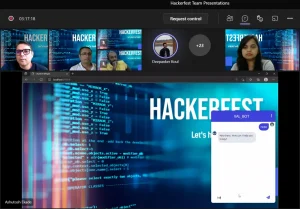
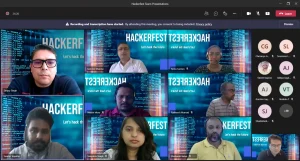
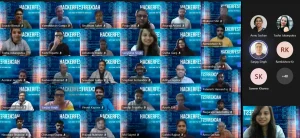
Hackerfest 2021 was more than absolutely a two-day event that brought together developers, thinkers, designers, and product managers to compete in a virtual hackerfest. Instead, it was an opportunity to create and demonstrate a new feature, tool, or app. The planning for this event began months in advance, with the in-house staff working around the clock to publicize the event, assist with registrations, and oversee the entire planning process.

When we received an overwhelming reaction, it was a very proud moment. Then, finally, D-day arrived, with two days of pure hacking and close to 80 people ready to compete for the Hackerfest.

As the teams reviewed their ideas and began the hack, the room was alive with anticipation. After 24 hours, they were weary but ecstatic to finish whatever projects they worked on. We made sure that any team or individual could build on an idea.

The team can’t be hacking on an empty stomach, of course. So food coupons were used to purchase pizzas, popcorn, and Red Bulls. We started our inaugural virtual hackerfest at 9:30 a.m. on November 26th and ran until 2:30 p.m. on November 27th. A total of 14 teams presented their prototypes for judging, with a final selection of 5 units.

And what a ride that turned out to be! We developed some pretty great ideas, tools, and product features in just 24 hours; basically, everything changed the way we functioned as an organization. In addition, it proved to be a fantastic tool to collaborate with people outside of the team, allowing us to communicate with and learn from people we do not often interact with.

In this article, we share successful procurement tips to build your multibillion-dollar company.

Large companies deploy independent procurement solutions as they have the financial and human resources to do so. However, for a midsize organization, dependence on an existing ERP involves manual interventions, which is daunting! A large multinational company has complex; global purchasing needs to manage. Its procurement group will typically have the strategy, budget, and necessary software to meet that challenge. Small and medium-sized businesses need a lower volume of goods and services supplied to stakeholders. And for that, the lack of strategy for infrastructure, budget, and tools that larger organizations enjoy.

In addition to the above, nowadays, more and more midsize companies are moving away from age-old tradition. They are adopting new-age procurement solutions to save more money than before.

Learn More: 360 Degree Digital Transformation with Zycus Source-to-Pay;

In this article, we share procurement tips to convince your procurement head regarding a holistic and dedicated procurement suite. Read the below procurement tips to gather from the four vital strategies that can be incorporated in your presentation to convince the boss.

S2P Digitization Tool
Source-to-Pay Digitization Diagnostic

..

Procurement Tip 1

Control maverick spending. It is an important procurement tip for a smaller enterprise. Large organizations track maverick spending. The challenge is if the revenue is over $500 million, multiple chains of commands makes it complicated. It is possible to spend $8000-$1000 without anyone noticing it. Discovery is the toughest part. If one such spending happens once every week, imagine how much would be the loss! To avoid such mishaps, this procurement tip on maverick spending can go a long way to deliver comprehensive, detailed, accurate, and consistent spend visibility.

..

Procurement Tip 2

Don’t fall for false promises – This procurement tip may sound simple, but this is the most complex part of purchasing. If you don’t give enough time and haven’t thought through who should be your vendor, you may end up spending more money than intended or saving less than you could. Many a time, a vendor may promise you the lowest cost, but later you realize there are many hidden overheads not highlighted in the contract. To save you from cheating, a strategic sourcing platform helps analyze all your suppliers’ overall performance in the past, set performance benchmarks, forecast savings, and suggests the best performing supplier thereby facilitating decision making and risk-avoidance. Use this procurement tip to your advantage.

..

Procurement Tip 3

Get access to all suppliers – Here’s the third procurement tip for you if you are facing the constant pressure of buying from local suppliers! If that’s the situation, here are the significant questions you got to ask::

    1.  Will my company benefit from buying locally?
    2. Is a global player offering me more benefit at a lesser cost?
    3. How will I judge the quality of goods supplied by the local player?

Having access to a variety of suppliers is the key to savings. Thanks to procurement solution providers with existing reliable supplier database, small and medium-sized enterprises can freely get in touch with local suppliers, analyze their past performance, benchmark them against global suppliers and finally make a reliably sound decision.

..

Procurement Tip 4

Have a 360° view – It is hard to see your friend lost under stacks of contracts that require manual checking. And later learning about a termination citing incompetency for unable to hold accountability! I am aware of many such procurement leaders who face challenges in streamlining all contracts and documents. So, if this is your trouble too, leverage this fourth procurement tip and deploy a procurement suite which will not only build, track, and store all contracts but also give you a 360° view of your entire purchasing cycle. Whether it’s a large organization or a midsize company, a sound procurement and supply management strategy is extremely crucial to the overall success of the organization.

Learn More: Uncover the hidden saving potential: How to get deep visibility in your current spend to identify hidden savings opportunities;

Conclusion

Depending on the size of the company, the strategy may be different, but it can work just as effectively as another should the above procurements tips be considered.  There is no ‘one size fits all’ strategy that will work; so don’t get caught up in a packaged, “ultimate procurement/sourcing” tool being offered up as a “magic bullet.” Instead, with the above procurement tips in mind, opt for a provider who can offer you a customized solution based on your company’s need of the hour. For SMEs, every small purchase is meaningful. Common sense and open, honest communication are still the most practical considerations for the small to medium size company. And therefore, a sound procurement and supply management strategy is extremely important for the overall success of the organization.

The contracting process has always been a major point of discontent between procurement and legal functions within an organization. Part 1 of this 2 part series provides a brief overview into the reasons for the collaboration challenges between procurement and legal departments. Part 2 of the series look into the technology and process initiatives that enable a collaborative relationship between the two functionaries.

A recent study by IACCM throws up several results that suggest that the relationship between procurement and legal teams are less than cordial in most organizations. Nearly 70% of the study respondents felt that the relationship between the two functions needed to improve. It is not surprising that the primary reason for discontent between the two functions was the contracting process.

White Papers-Driving collaboration through Contract Management

Contract Collaboration

Legal teams look at contracts as tools to streamline processes and establish strict controls while procurement looks at it as the first step in establishing cost savings and supplier relationships. With the economy becoming vastly different – with supply chains becoming growingly interconnected and vast- these disparate perspectives of the contracting process have brought their own unique challenges for both the departments. Legal teams now have to handle a much larger number of contracts in multiple languages and with a wide variety of, at times very specific and unique contracting terms and conditions.

Learn More: Contract Lifecycle Management Software

Procurement, no longer a tactical function, needs to develop long term strategic relationships with suppliers and add more value to the company’s bottom line. This needs contracting to be more flexible to generate additional savings and contribute in value creation. This may include insertion of necessary clauses that help them take advantage of dynamic marketing conditions – say for e.g. escalation and de-escalation clauses for highly volatile commodities.

So on the one hand as legal looks into standardizing the contracting process, procurement on the other hand needs more flexibility. This is one major reason of discord between the two functionaries. The other area of concern includes the contract creation process. Procurement with its need to take advantages of prevalent market conditions and the supplier’s disposition to discounts at the time of negotiation needs the contract creation and execution cycles to be as short as possible. Legal teams on the other hand have a primary responsibility to ensure every contract is free of risk to the organization and hence may take frustratingly long periods to go through minute details in all clauses within the contract. This may result in procurement missing out on additional savings based on time discounts or market variations.

Software delivery forms an important process post an organization’s decision to buy a solution. It is a process which involves close collaboration between the solution provider and the buying organization. Success of any software implementation project rests on the level of adoption of the end user. This post will look into the 3 phases involved in project implementation.

  • Phase 1: Project Kick-Off

Project Implementation begins with the Kick-off phase which is characterized by establishing an understanding with the client vis-à-vis the objectives of implementing the software and also understanding the existing ERP/software set-ups. The focus during this phase is on 2 key areas, Project management & Data management. Project Management deals with focusing on defining and achieving client specific KRA’s while the Data Management team works towards achieving greater classification accuracy. These two steps play a major role in realizing ROI from software implementation.

Based on the availability of client’s time, resources and budgets, Zycus provides flexibility in terms of on-site/off-site project kick off. Zycus also establishes a single point of contact within the organization to understand the procurement function and within the IT team to understand the infrastructure and logistics involved. By having a specialist team study the various type of data in various source systems, Zycus ensures minimal time consumption of clients.

Once the KRA’s have been frozen, a steering committee is established with the client to accomplish the implementation process which is best suited for the organization. The steering committee has the responsibility to track the KRA’s during regular meetings to ensure the project is moving smoothly. Another responsibility of the steering committee is to look into the architecture provided by the Zycus data management team to be carried out to classify the data.

  • Phase 2: Data Extraction and Validation

Globalization has resulted into organizations having their data in multiple languages spread across different ERP systems. Also every organization has its unique business requirements. Implementation of the solution requires extraction, transformation and loading (ETL) of data from disparate systems. Let us look into how Zycus simplifies the process for the customer:

Zycus works on the principle of providing flexibility for the client. In the case of data extraction, client has the flexibility of either carrying out the extraction process themselves or using Zycus’ service for data extraction. In the case of the former, the client’s IT team extracts the data and provides it in multiple files, which Zycus then normalizes and consolidates to provide the client with mutually agreed upon data templates.

In the latter case however, Zycus’ consulting team makes an on-site visit for end-to-end data extraction and transformation by leveraging on our past experience of dealing with diverse systems spread across geographies. Zycus makes use of internally developed tools for complex transformation activities to cut down efforts.

  • Phase 3: Perception Alignment

This phase is a crucial step towards choosing the classification schema for organizations. It involves identifying current level/schema of classification and then providing a suitable schema for the organization. Zycus has a team of domain experts which help in clearly segmenting data as per industry standards wherein they analyze and work out a suitable schema based on client needs and industry standards.


To know more about Zycus’ taxonomy expertise click here


Brought to you by Zycus, MetalMiner’s Sourcing Outlook covers key commodities markets (industrial metals, energy, etc.) and provides an intelligent viewpoint for metal-buying professionals. This month’s episode looks into what’s happening as a result of the EU debt crisis, as well as the stainless steel and non-ferrous metal markets. In the One-On-One segment, Lisa Reisman, Managing Director, Metal Miner interviews Jennifer Diggins, Director Public Affairs for Nucor Corporation and Roger Ferch of the National Steel Bridge Alliance about Buy America provisions and how they affect material sourcing for major infrastructure projects like bridges.

This site is registered on wpml.org as a development site. Switch to a production site key to remove this banner.